- 13 Posts
- 173 Comments

 2·3 months ago
Quite frankly, in the last two years, I’ve accepted the AI term because that’s pretty close to what we expected sci-fi AI to be.
Something that you talk to that understands from the context what you mean and that calls the appropriate tool is exactly things like Jarvis, like HAL 9000.
AI can be fine, I cringed at the mention of Starlink, even though that’s a case where it makes sense.
I suspect voice control + a small LLM for tool uses qualifies it as “AI”
 1·3 months ago
I am sure that anarchism as it is today still has tons to learn and understand, and changes to make, but if you hang out with anarchists who think decolonization, feminism or anti-racism are optional stances, heh, you may not be with what most would call anarchists. That’s widely considered part of the package nowadays.
The microscope thingy takes me to something that is not visible to a naked eye because it’s tiny. For me intersectionality is the opposite of that.
I prefer the way you present it. However, I think I see what they mean by that. A microscope allows to observe the cells in order to understand the organism. Intersectionalism will look at individual situations, which are by essence unique, to understand broader issues and how they interact.
In my experience, there is also a “negative photography” aspect, which would probably be a metaphor for another aspect of intersectionality: by accumulating different experiences of different oppression, you start noticing patterns, not in the oppressed, but in the oppressors. If you were too see only the footsteps of people in a forest, it would teach you where the trees are implicitly, and also where the passages and the bridges are.
I feel we need inverse buddhism: instead of “compassion to the world”, which required a huge imagination effort in the times of Buddha, we are now overflowed with the vision of the world’s suffering and we need re-align our compassion with the other fields that matter: the portion of the world we can act upon and that can act upon us.
You are not going to stop the bombs that are right now flying towards people. But you are going to receive the news of the suffering they cause, and if you are even slightly empathic, you will feel the pain of the people these bomb will make grieve.
What matters is that you can make good where you are. Don’t be ignorant of the world’s pain, but protect yourself.
The world just grew its nervous system and it fires its pain receptors like crazy. Do what you need to stay sane.
 2·4 months ago
Yes, I was a but cynical also for the sake of conciseness, but there is indeed and interesting point in green cities, that’s one question on which ecologism and environmentalism differ. The question is whether you are trying to preserve the whole ecosystem or an environment in which humans feel good.
To be honest, I don’t want to live in a concrete jungle. I think inhumane to live in a super dense city totally disconnected to nature. But I also would like that we collectively accept that this is a preference that is harmful to the ecosystem and that it is sometimes okay to have such preferences, if we manage to make them sustainable.
20 years ago a urbanist I was working with, when we were doing city simulations to help offset CO2 footprint told me “you know, the ugly truth is that if we want to lower our CO2 emissions to the max, we should all live in skyscrapers on top of a school, supermarket and incinerator.”
Thing is, we need to recognize the tension between an enjoyable environment, wildlife preservation, human health, the ecosystem’s health… And we need to see further than the current, petty, political compartimentalization of these questions. I wish one day we start consider these questions a bit more seriously
This effect exists, as well amongst left wing leaders, yet we do observe more diminishing inequalities in countries ruled by left-wing coalitions.
I do think that power-seeking individuals will tend to be anti-equality, yet to some extent, democracy works as the left-wing variety of these individuals have to conquer power by increasing redistribution.
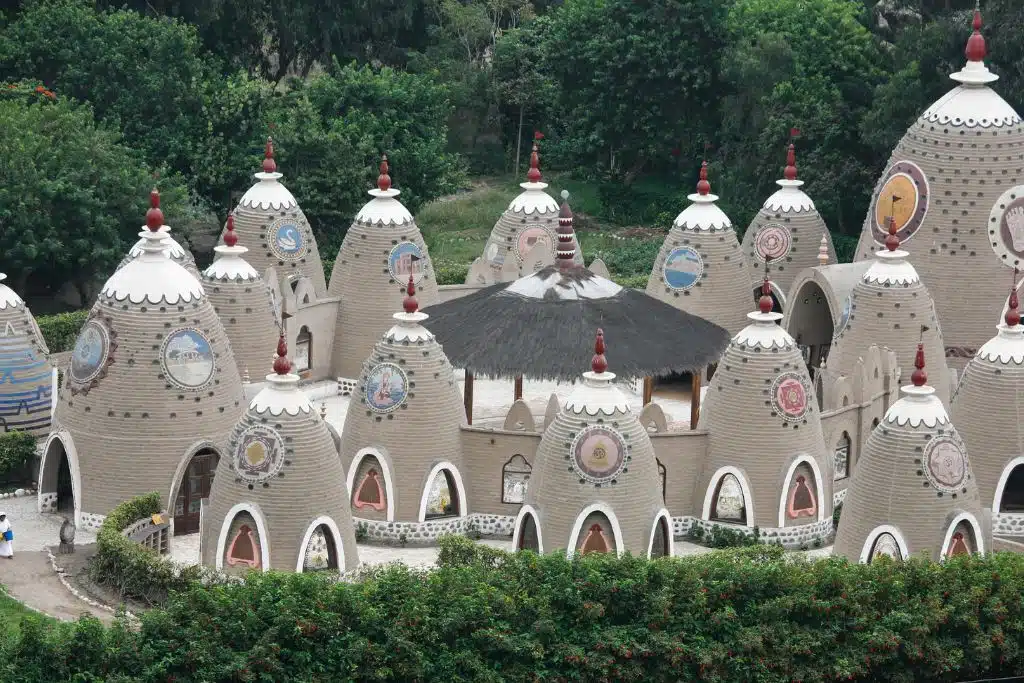
I’ll be honest, I thought the top one was an ‘eco village’ in construction.
Quite frankly, trees inside cities are decorative. If you truly care about ecology and the ecosystem, you look at the forestry on a national or regional level. Theoretically, having the densest and hence the smallest cities possibles would be the best for the overall ecosystem. When I see a park in a city I am thinking “they force the city to grow its radius by that much”.
I’d rather have a very dense urban seed surrounded by natural reserves than a chill cityscape with a few scattered parks that are not big enough to sustain a full ecosystem.
We elect conservatives, they are afraid of change. It is as simple as that.
Before the Arab Spring there was even a more ambitious plan: https://en.wikipedia.org/wiki/Desertec#/media/File:DESERTEC-Map_large.jpg
And also a huge need for AC, when solar is typically at the peak.
I wondered when I visited Malaysia why there was not more solar panels around, and a local explained to me that it was mostly lobbying and corruption, with local electricity providers making it illegal.
I don’t wish on anyone what Syria went through, but I am also hopeful that when systems breaks, workarounds exist and may in the long term improve the overall situation.
 4·6 months ago
I wonder if one could not make an aggregation of the posts in a collection of communities (I think piefed has that? I dont use that feature) but where the votes would be weighted by participants. So a post with 100 vote on the 10k users /c/PoliticsUS would have the same visibility as a 5 votes post on /c/EverythingSwahili with 500 users.
This actually makes total sense!
I agree. Solarpunk is a lot about thinking globally and acting locally.
Steps can be taken against nationalism, regionalism and xenophobia without forbidding local communities.
Re: No borders, no nations
Just before reading this paragraph, I jumped quickly into /c/immigration@slrpnk.net as it is an interest of mine, and quickly opted out when I saw it only talks about US.
The reason why I like have a national community, is because it also allows to talk about politics without it being only about Trump and US politics.
I hate nationalism very much and would love to have a more global hub to learn about the important political subjects that dont crop up that much in French (my local one) or US media. Sadly, I never see such a thing. National communities are a bad solution but to a very real problem, which is that global themed communities end up being US ones. There needs to be a solution to that, and it is not clear to me what it should be. Quotas per country/continent? split into US/non-US communities? Language-centric communities?
About languages, this is also something that could require a bit of discussion. Of course I love that internet as a de facto lingua franca, which is English. But that is also pretty exclusionary for non-speakers. I know there is an understandable dislike of “AI” tools here, but this is one case where automated (and optional, and clearly labelled as such) translations are something that could help bridge communities and cultures. I wonder how difficult and expensive putting together an automated translation system could be.
The critics of these policies have been unironically almost on that level.
We have one that wants to bring back cars and considers that there are many elders afraid to cross streets because there are too many bikes.
Honestly they are embarrassed a how popular this policy turned out to be. For years they have lambasted the chaos caused by the many changes and public works that blocked accesses but now that the results are there, they are hard to argue against.
I guess Metropolis solar?
I like tech and I want sustainability. We “just” need to get rid of capitalism and finish the transition out of fossil fuels but all the tools are there.





Sad but interesting.
When the infrastructure for big power plants exists, it’s usually more convenient and profitable to use them. But when they don’t, solar panels make so much sense. It is nice to see that it’s more about solar panel than diesel generators.