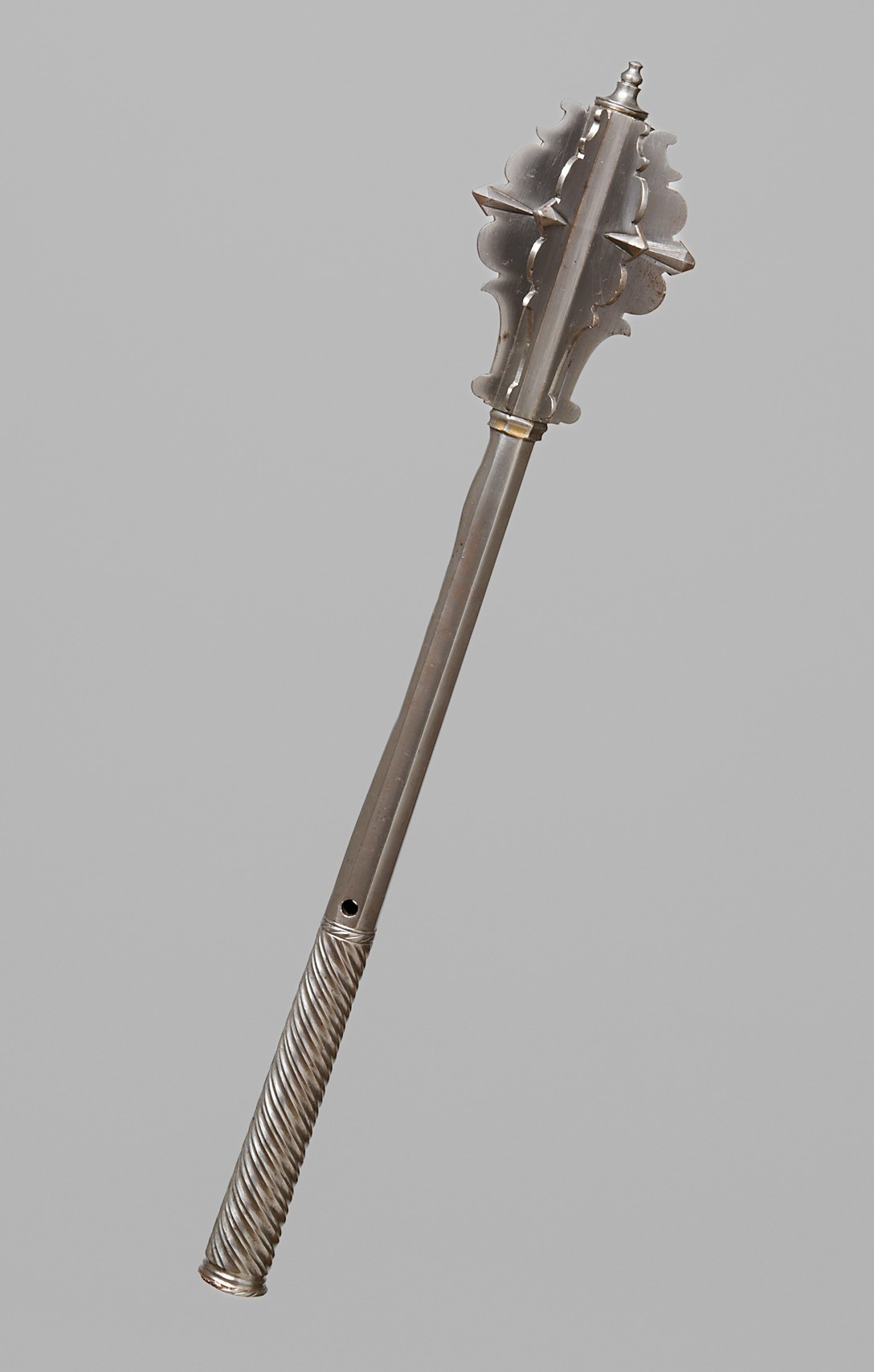
PugJesus@piefed.socialM to HistoryArtifacts@piefed.socialEnglish · 2 months agoMace, Italy, ~1530 ADmedia.piefed.socialimagemessage-square10linkfedilinkarrow-up148arrow-down10
arrow-up148arrow-down1imageMace, Italy, ~1530 ADmedia.piefed.socialPugJesus@piefed.socialM to HistoryArtifacts@piefed.socialEnglish · 2 months agomessage-square10linkfedilink
minus-squareIm_old@lemmy.worldlinkfedilinkEnglisharrow-up4·2 months agoWell, yes and no. Chasing can also mean removing material with a chisel, not just indenting by bending/hammering.
minus-squareSuccessful_Try543@feddit.orglinkfedilinkEnglisharrow-up2·edit-22 months agoThe original text says Schlagkopf: Eisen, geschmiedet, geschnitten (punching head: iron, forged, cut) which is exactly that. Shaping by hammering and bending would be treiben / getrieben in German.
minus-squarePugJesus@piefed.socialOPMlinkfedilinkEnglisharrow-up2·2 months agoIt says “Schaft: Eisen, getrieben.” doesn’t it?
minus-squareSuccessful_Try543@feddit.orglinkfedilinkEnglisharrow-up2·edit-22 months agoYes, as one can see, the shaft is hollow. So one or two sheet of forged metal, bent and chased and finally soldered (or even welded?). Edit: I didn’t notice you were talking about the shaft from the very beginning. Sorry, too early in the morning.

Well, yes and no. Chasing can also mean removing material with a chisel, not just indenting by bending/hammering.
The original text says Schlagkopf: Eisen, geschmiedet, geschnitten (punching head: iron, forged, cut) which is exactly that. Shaping by hammering and bending would be treiben / getrieben in German.
It says “Schaft: Eisen, getrieben.” doesn’t it?
Yes, as one can see, the shaft is hollow. So one or two sheet of forged metal, bent and chased and finally soldered (or even welded?).
Edit: I didn’t notice you were talking about the shaft from the very beginning. Sorry, too early in the morning.